
Popular categories
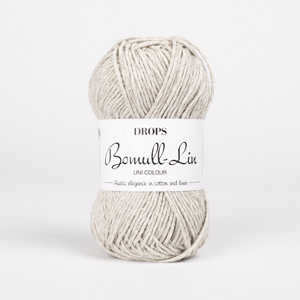
Looking for a yarn?






|
|
Sand Whisper Top#sandwhispertop |
|
 |
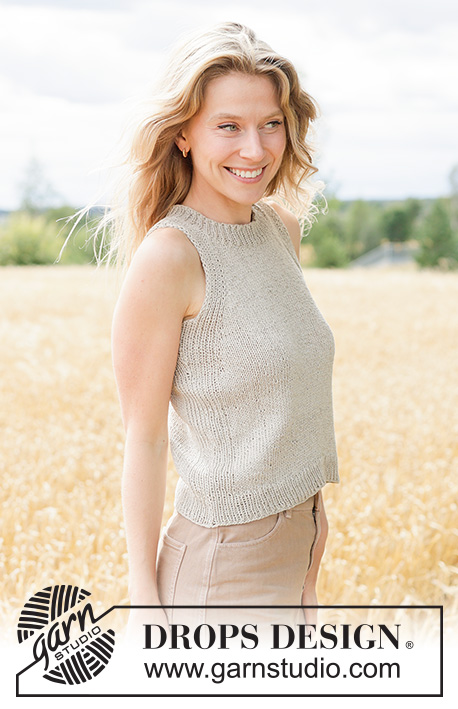 |
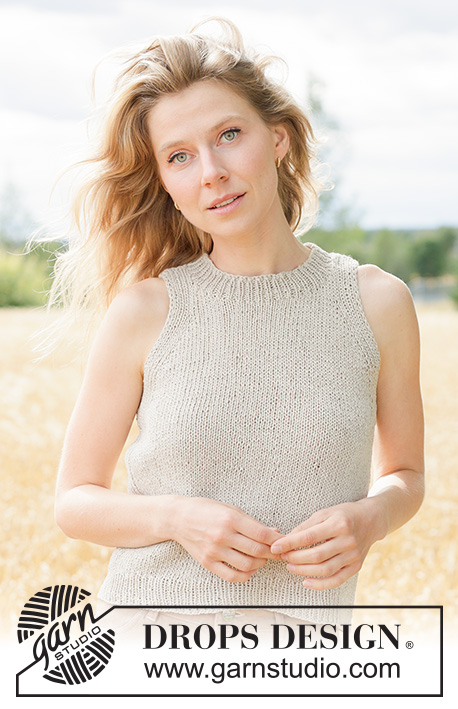
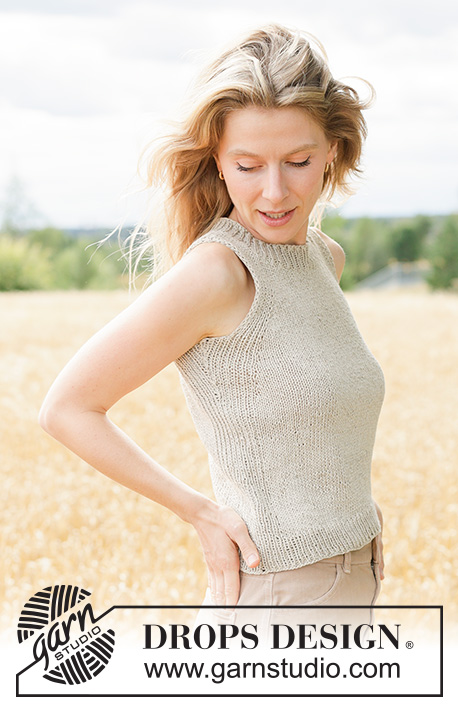
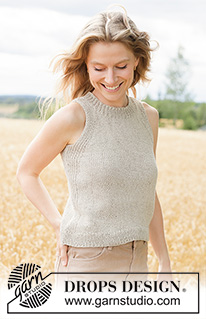
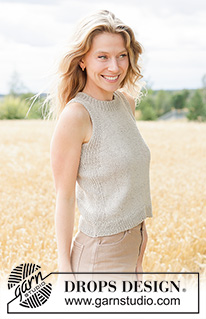
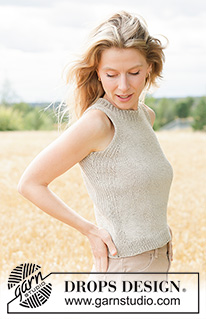
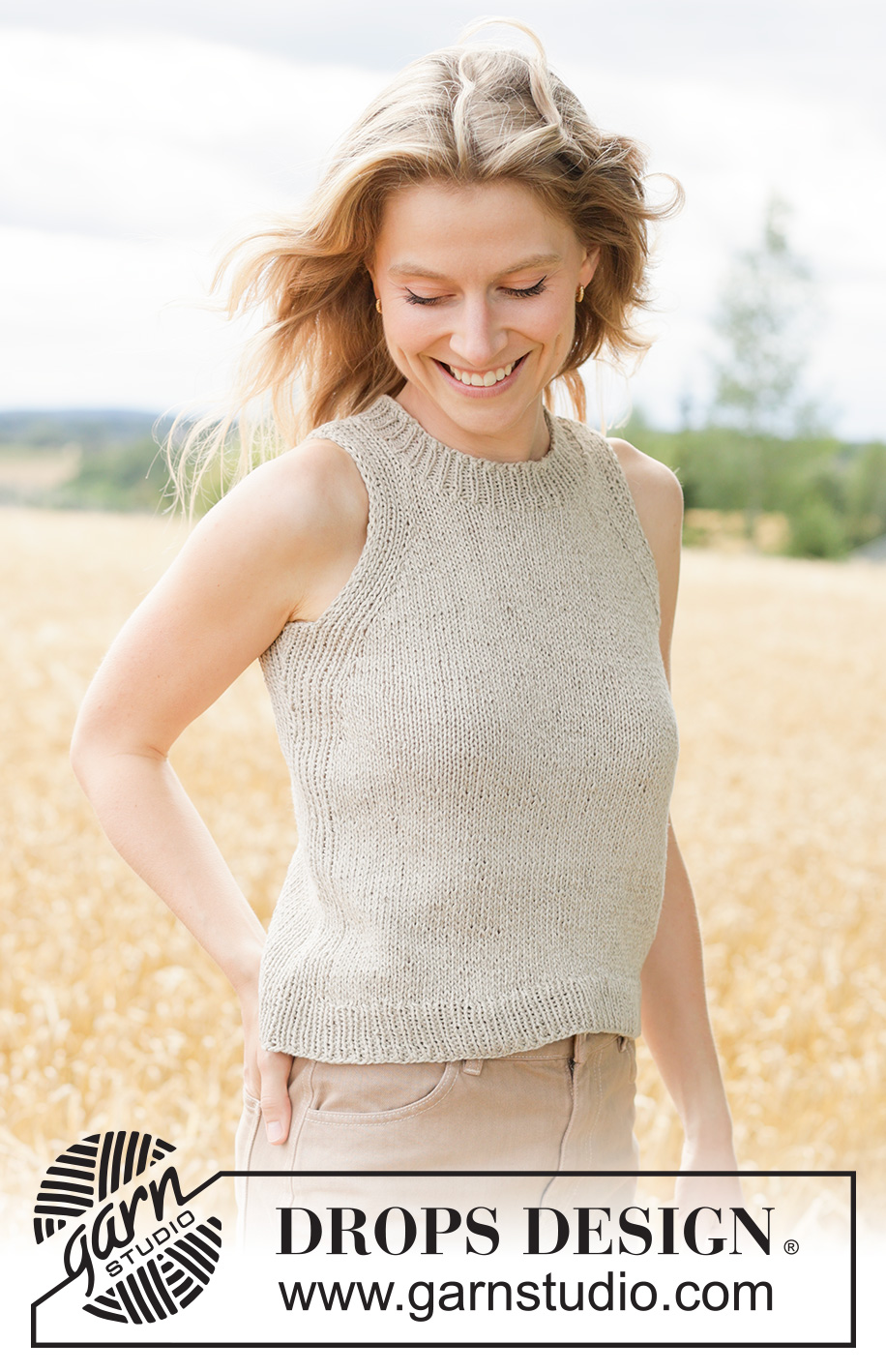
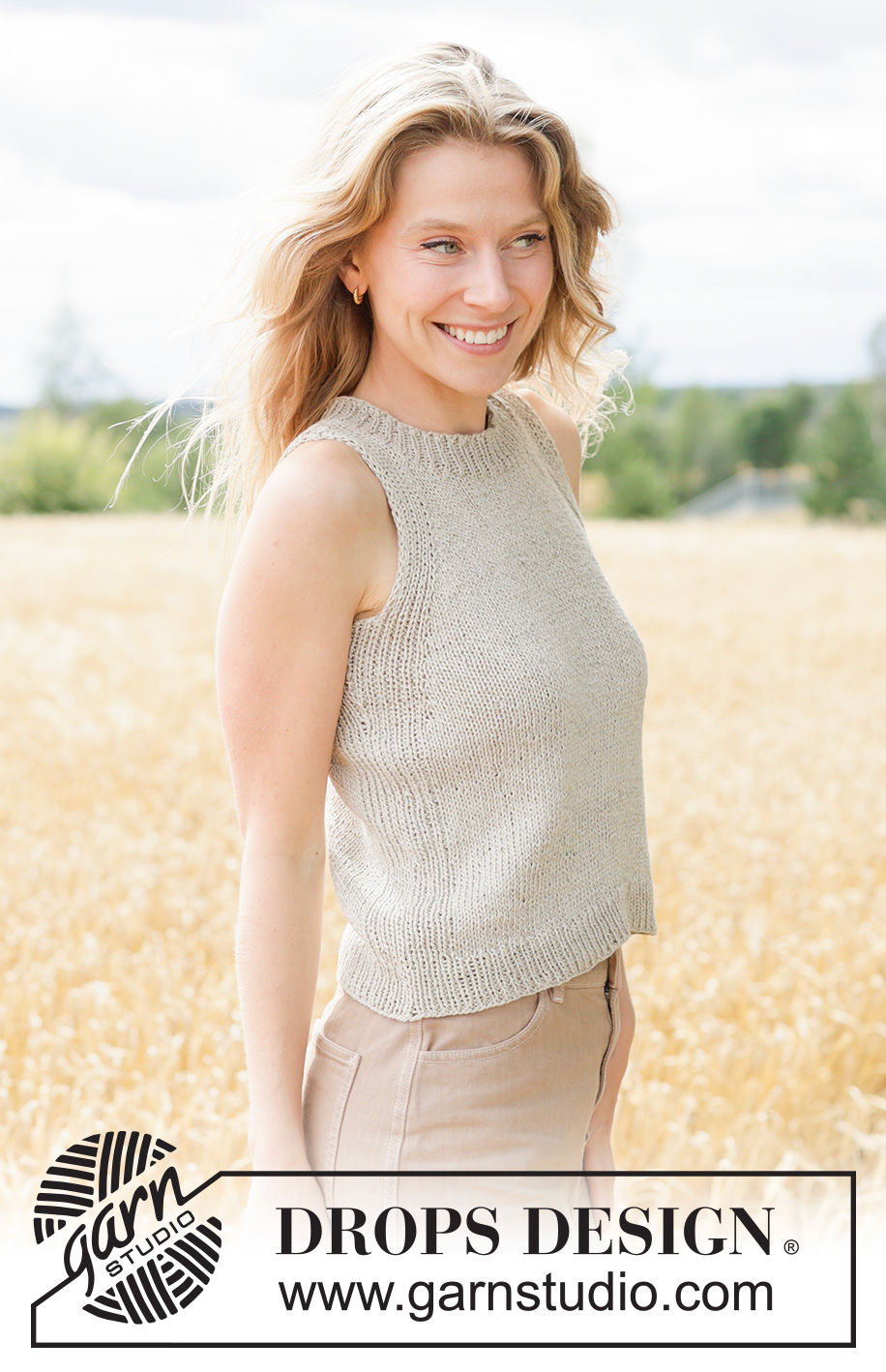
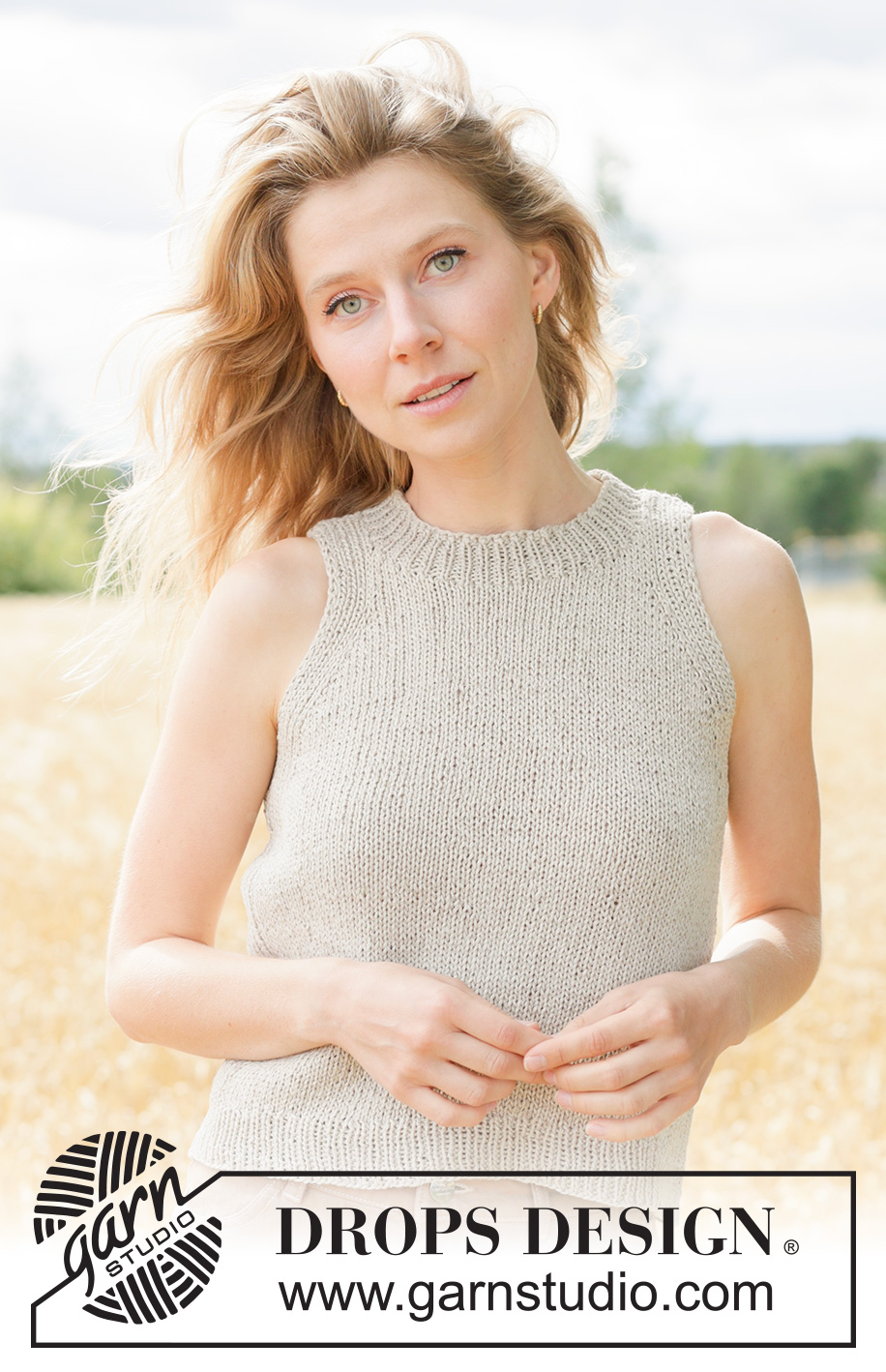
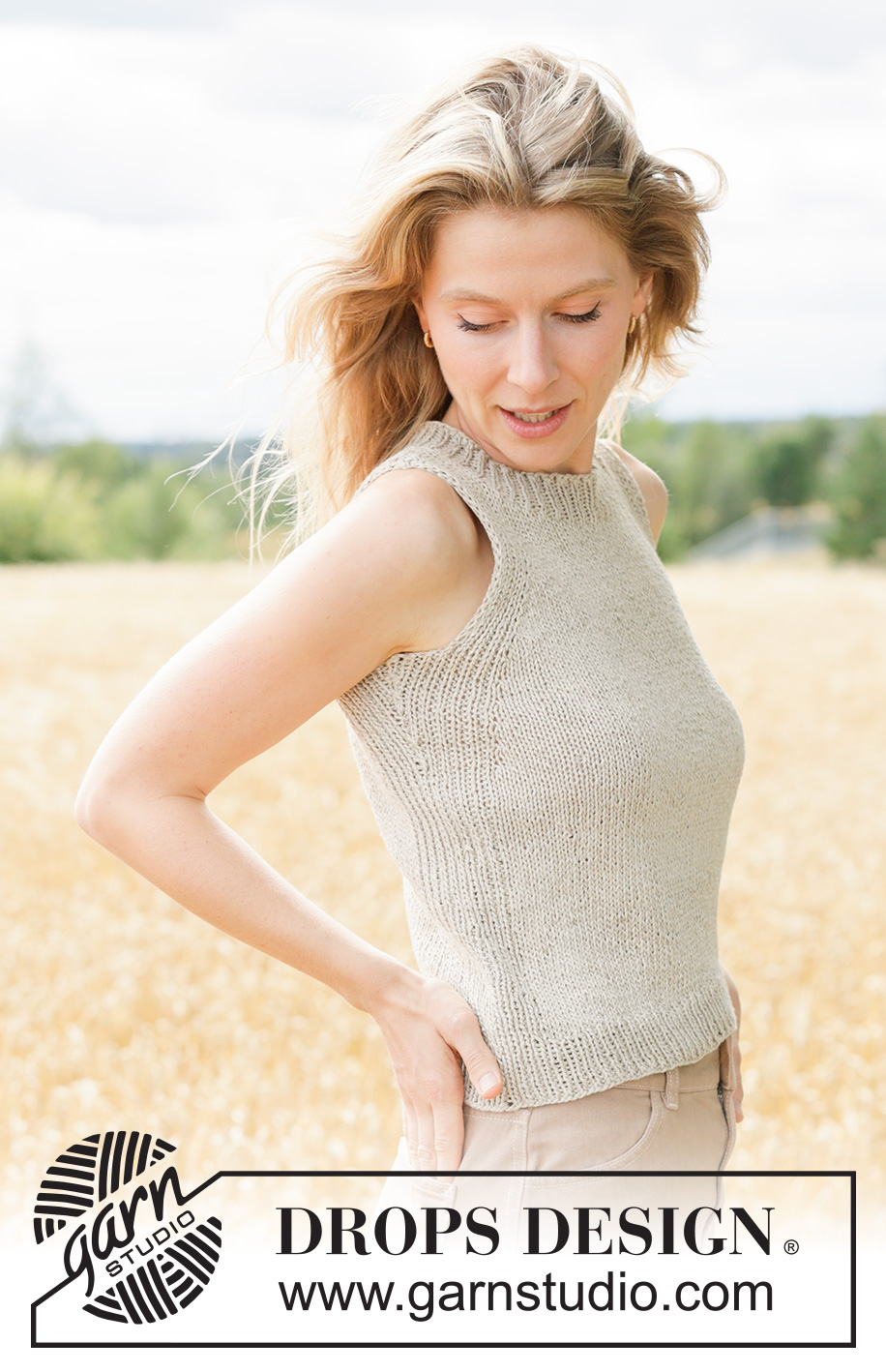
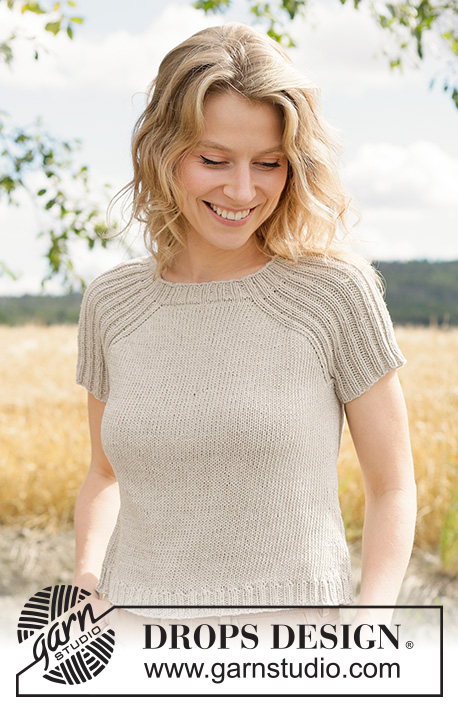
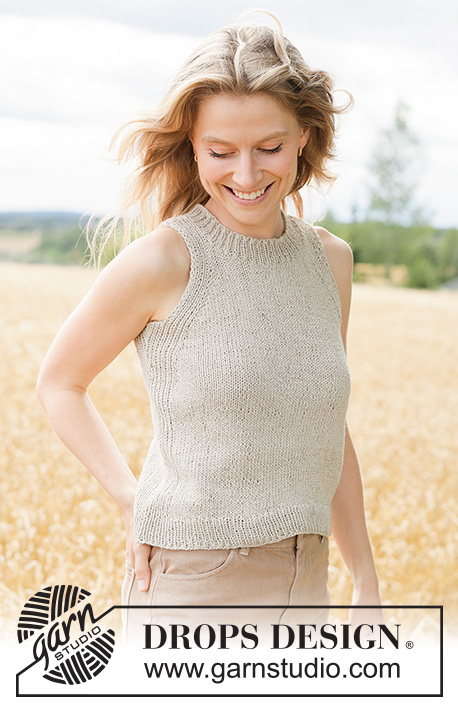
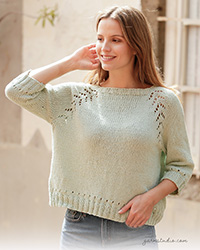
Knitted top in DROPS Bomull-Lin. Piece is knitted top down with rib, stockinette stitch and I-cord. Size XS – XXXL.
DROPS 268-7 |
|
|
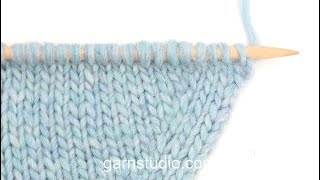
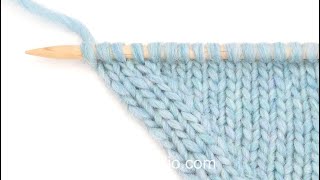
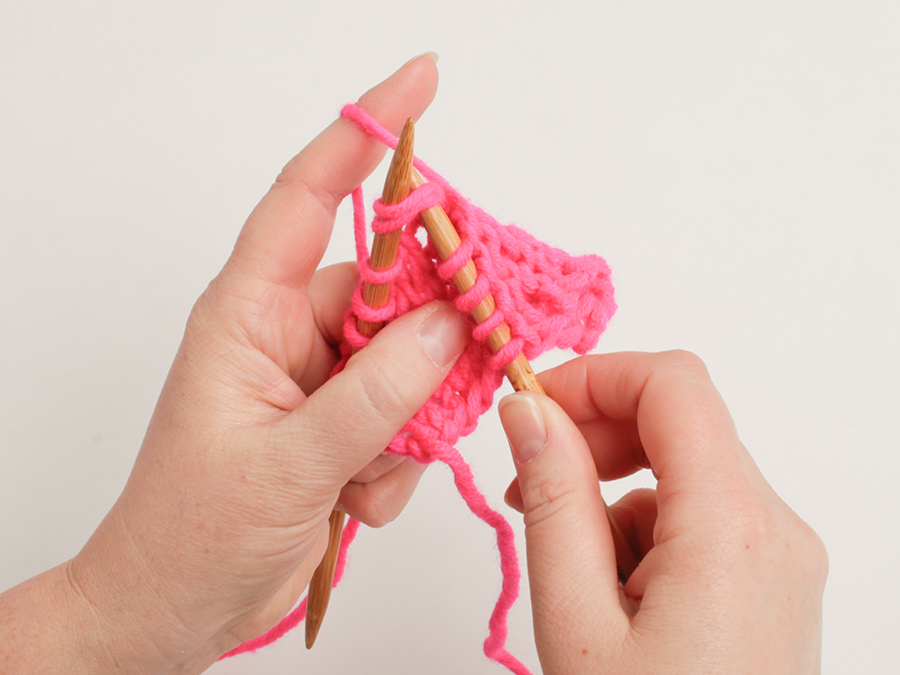
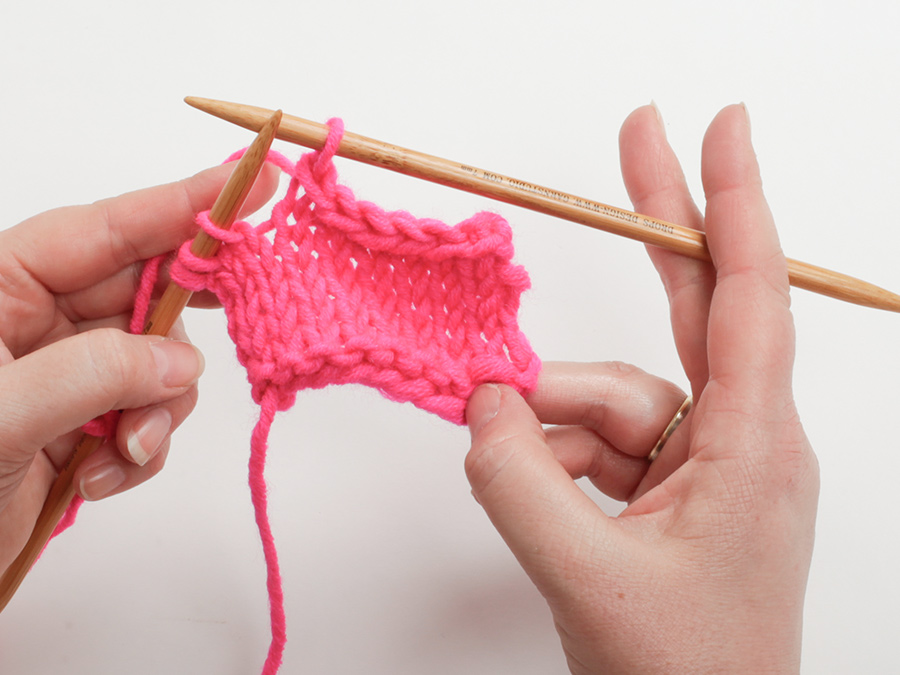
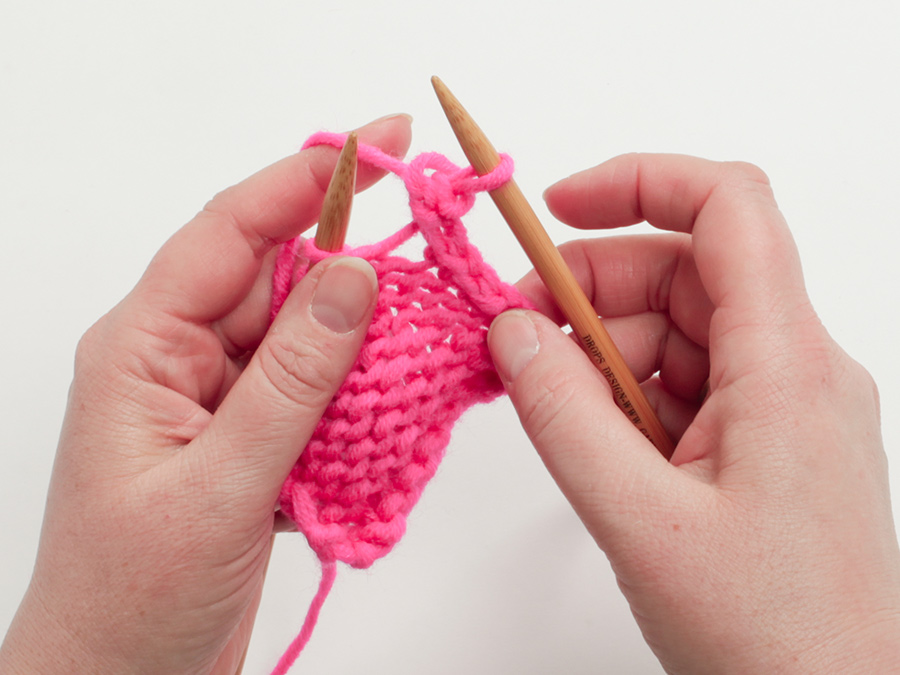
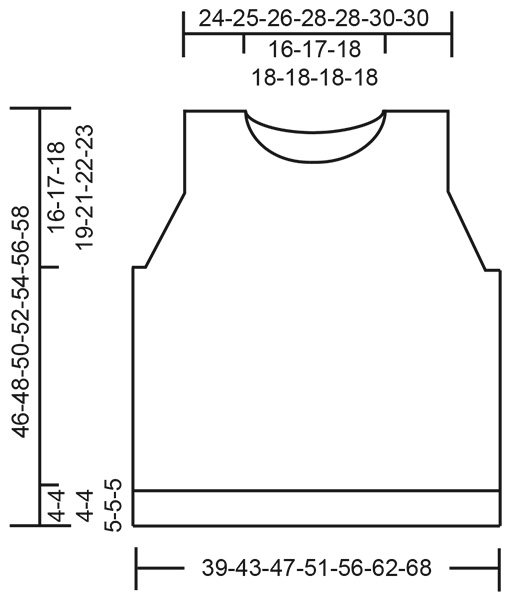
---------------------------------------------------------- EXPLANATION FOR THE PATTERN: ---------------------------------------------------------- 2 STITCHES I-CORD: BEGINNING OF ROW: Slip 1 stitch purlwise with strand in front of piece, knit 1. END OF ROW: Slip 1 stitch purlwise with strand in front of piece, knit 1. Work like this on right side and wrong side. INCREASE TIP-1: INCREASE 1 STITCH TOWARDS THE LEFT- from RIGHT SIDE: Use left needle to pick up yarn between 2 stitches from row below, pick up yarn from the front and knit stitch in stitch loop behind the needle. INCREASE 1 STITCH TOWARDS THE RIGHT - from RIGHT SIDE: Use left needle to pick up yarn between 2 stitches from row below, pick up yarn from the back and knit stitch in stitch loop in front of needle. INCREASE TIP-2: INCREASE 1 STITCH TOWARDS THE RIGHT - from WRONG SIDE: Use left needle to pick up yarn between 2 stitches from row below, pick up yarn from the back and purl stitch in stitch loop in front of needle. INCREASE 1 STITCH TOWARDS THE LEFT - from WRONG SIDE: Use left needle to pick up yarn between 2 stitches from row below, pick up yarn from the front and purl stitch in stitch loop behind the needle. DECREASE TIP: Decrease 1 stitch on each side of the middle stitch under armhole. Decrease into knit and purl every other time so that the new stitch fits into the rib, i.e. 3 stitches become 1 stitch. Begin decrease when 1 stitch remain before the middle stitch under armhole and decrease as explained below: DECREASE INTO 1 KNIT STITCH: Slip 1 stitch knitwise, knit 2 together, pass slipped stitch over (= 2 stitches decreased). The new stitch is now the middle stitch under armhole. DECREASE INTO 1 PURL STITCH: Purl 3 together (= 2 stitches decreased). The new stitch is now the middle stitch under armhole. ---------------------------------------------------------- START THE PIECE HERE: ---------------------------------------------------------- TOP - SHORT OVERVIEW OF THE PIECE: In this pattern needles of different length have been used, begin with fitting length for number of stitches and switch as needed. Worked top down. First work front piece and back piece separately, back and forth down to armhole. Then slip front piece and back piece together, and work body in the round downwards. Finish by picking up stitches around the neck and work a neck edge. If 0 stitches are given for the chosen size, it means that you skip the information and jump to next information. LEFT STRAP FRONT PIECE: Cast on 11-11-11-13-13-15-15 stitches on circular needle size 4.5 MM = US 7 with DROPS Bomull-Lin. Work as follows: ROW 1 (= right side): Knit 2, work rib (= purl 1/knit 1) until 2 stitches remain on row, finish with 2 STITCHES I-CORD – read explanation above. ROW 2 (= wrong side): Work 2 stitches I-cord, work knit over knit and purl over purl the rest of row. Work 1st and 2nd ROW back and forth for 3-4-4-5-6-7-7 cm = 1⅛"-1½"-1½"-2"-2⅜"-2¾"-2¾" - last row is worked from wrong side. Now increase for neck, work rib as before while at the same time casting on stitches at the end of every row from wrong side - work the new stitches in stockinette stitch. Cast on 1 stitch 2 times, 2 stitches 2 times and 3 stitches 1 time – last row worked is from wrong side (= 10 rows worked). There are 20-20-20-22-22-24-24 stitches on needle. Cut the yarn, and work right strap as explained below. RIGHT STRAP FRONT PIECE: Cast on 11-11-11-13-13-15-15 stitches on circular needle size 4.5 MM = US 7. Work as follows: ROW 1 (= right side): Work 2 stitches I-cord, work rib (= purl 1/knit 1) until 2 stitches remain on row, finish with 2 knit stitches. ROW 2 (= wrong side): Work knit over knit and purl over purl until 2 stitches remain on row, finish with 2 stitches I-cord. Work 1st and 2nd ROW back and forth for 3-4-4-5-6-7-7 cm = 1⅛"-1½"-1½"-2"-2⅜"-2¾"-2¾" - last row is worked from wrong side. Now increase for neck, work rib as before while at the same time casting on stitches at the end of every row from right side - work the new stitches in stockinette stitch. Cast on 1 stitch 2 times, 2 stitches 2 times and 3 stitches 1 time – last row worked is from wrong side (= 10 rows worked). There are 20-20-20-22-22-24-24 stitches on needle. Do not cut the yarn, on next row from right side cast on new stitches for neck between right and left strap, work as follows: Work 2 stitches I-cord, work 8-8-8-10-10-12-12 stitches rib as before, insert 1 marker on row before next stitch, knit 10 stitches, cast on 11-13-15-15-15-15-15 new stitches on row, work over left strap from right side as follows: Knit 10, insert 1 marker on row before next stitch, work 8-8-8-10-10-12-12 stitches rib as before, finish with 2 stitches I-cord = 51-53-55-59-59-63-63 stitches for front piece. FRONT PIECE: = 51-53-55-59-59-63-63 stitches. Work in stockinette stitch with 8-8-8-10-10-12-12 stitches rib and 2 stitches I-cord in each side until piece measures 8-9-9-10-11-12-12 cm = 3⅛"-3½"-3½"-4"-4⅜"-4¾"-4¾" from cast-on edge on top of shoulder. Work last row from wrong side. Now increase stitches in each side - read INCREASE TIP-1 and work as follows: ROW 1 (= right side): Work 2 stitches I-cord, work 8-8-8-10-10-12-12 stitches rib as before, move marker on to right needle, increase 1 stitch towards the left, knit until next marker, increase 1 stitch towards the right, move marker on to right needle, work 8-8-8-10-10-12-12 stitches rib as before, finish with 2 stitches I-cord. ROW 2 (= wrong side): Work 2 stitches I-cord, work 8-8-8-10-10-12-12 stitches rib as before, purl until 10-10-10-12-12-14-14 stitches remain on row, work 8-8-8-10-10-12-12 stitches rib as before, finish with 2 stitches I-cord. Work 1st and 2nd ROW 9-9-10-8-8-4-2 times in total (= 18-18-20-16-16-8-4 rows worked) = 69-71-75-75-75-71-67 stitches. Then increase on every row – read INCREASE TIP-2 (does not apply to size XS and S) and work as follows: ROW 1 (= right side): Work 2 stitches I-cord, work 0-0-8-8-10-10-12-12 stitches rib as before, move marker on to right needle, increase 1 stitch towards the left, knit until next marker, increase 1 stitch towards the right, move marker on to right needle, work 0-0-8-10-10-12-12 stitches rib as before, finish with 2 stitches I-cord. ROW 2 (= wrong side): Work 2 stitches I-cord, work 0-0-8-10-10-12-12 stitches rib as before, move marker on to right needle, increase 1 stitch towards the right, purl until next marker, increase 1 stitch towards left, move marker on to right needle, work 0-0-8-10-10-12-12 stitches rib as before, finish with 2 stitches I-cord. Work 1st and 2nd ROW 0-0-1-3-4-8-11 times in total (= 0-0-2-6-8-16-22 rows worked) = 69-71-79-87-91-103-111 stitches. 9-9-12-14-16-20-24 increases have been done in total in each side. Front piece measures approx. 16-17-18-19-21-22-23 cm = 6¼"-6¾"-7"-7½"-8¼"-8¾"-9" from cast-on edge on top of shoulder. Cut the yarn and slip front piece on a thread or stitch holder. Work back piece as explained below. RIGHT STRAP BACK PIECE: Cast on 11-11-11-13-13-15-15 stitches on circular needle size 4.5 MM = US 7. Work as follows: ROW 1 (= right side): Knit 2, work rib (= purl 1/knit 1) until 2 stitches remain on row, finish with 2 stitches I-cord. ROW 2 (= wrong side): Work 2 stitches I-cord, work knit over knit and purl over purl the rest of row. Work 1st and 2nd ROW 2 times in total (= 4 rows worked). Now increase for neck, work rib as before while at the same time casting on stitches at the end of every row from wrong side - work the new stitches in stockinette stitch. Cast on 1 stitch 1 time and 2 stitches 1 time – last row worked is from wrong side (= 4 rows worked). There are 14-14-14-16-16-18-18 stitches on needle. Cut the yarn, and work left strap as explained below. LEFT STRAP BACK PIECE: Cast on 11-11-11-13-13-15-15 stitches on circular needle size 4.5 MM = US 7. Work as follows: ROW 1 (= right side): Work 2 stitches I-cord, work rib (= purl 1/knit 1) until 1 stitch remains on row, finish with 1 knit stitch. ROW 2 (= wrong side): Work knit over knit and purl over purl until 2 stitches remain on row, finish with 2 stitches I-cord. Work 1st and 2nd row 2 times in total (= 4 rows worked). Now increase for neck, work rib as before while at the same time casting on stitches at the end of every row from right side - work the new stitches in stockinette stitch. Cast on 1 stitch 1 time and 2 stitches 1 time – last row worked is from wrong side (= 4 rows worked). There are 14-14-14-16-16-18-18 stitches on needle. Do not cut the yarn, on next row from right side cast on for neck between left and right strap, work as follows: Work 2 stitches I-cord, work 8-8-8-10-10-12-12 stitches rib as before, insert 1 marker on row before next stitch, knit 4 stitches, cast on 23-25-27-27-27-27-27 new stitches on row, work over right strap from right side as follows: Knit 4, insert 1 marker on row before next stitch, work 8-8-8-10-10-12-12 stitches rib as before, finish with 2 stitches I-cord = 51-53-55-59-59-63-63 stitches for back piece. BACK PIECE: = 51-53-55-59-59-63-63 stitches. Work in stockinette stitch with 8-8-8-10-10-12-12 stitches rib and 2 stitches I-cord in each side until piece measures 8-9-9-10-11-12-12 cm = 3⅛"-3½"-3½"-4"-4⅜"-4¾"-4¾" from cast-on edge on top of shoulder - work the new stitches cast on for neck in stockinette stitch. Work last row from wrong side. Now increase stitches in each side - remember INCREASE TIP-1 and work as follows: ROW 1 (= right side): Work 2 stitches I-cord, work 8-8-8-10-10-12-12 stitches rib as before, move marker on to right needle, increase 1 stitch towards the left, knit until next marker, increase 1 stitch towards the right, move marker on to right needle, work 8-8-8-10-10-12-12 stitches rib as before, finish with 2 stitches I-cord. ROW 2 (= wrong side): Work 2 stitches I-cord, work 8-8-8-10-10-12-12 stitches rib as before, purl until 10-10-10-12-12-14-14 stitches remain on row, work 8-8-8-10-10-12-12 stitches rib as before, finish with 2 stitches I-cord. Work 1st and 2nd ROW 9-9-10-8-8-4-2 times in total (= 18-18-20-16-16-8-4 rows worked) = 69-71-75-75-75-71-67 stitches. Then increase on every row – remember INCREASE TIP-2 (does not apply to size XS and S) and work as follows: ROW 1 (= right side): Work 2 stitches I-cord, work 0-0-8-10-10-12-12 stitches rib as before, move marker on to right needle, increase 1 stitch towards the left, knit until next marker, increase 1 stitch towards the right, move marker on to right needle, work 0-0-8-10-10-12-12 stitches rib as before, finish with 2 stitches I-cord. ROW 2 (= wrong side): Work 2 stitches I-cord, work 0-0-8-10-10-12-12 stitches rib as before, move marker on to right needle, increase 1 stitch towards the right, purl until next marker, increase 1 stitch towards left, move marker on to right needle, work 0-0-8-10-10-12-12 stitches rib as before, finish with 2 stitches I-cord. Work 1st and 2nd ROW 0-0-1-3-4-8-11 times in total (= 0-0-2-6-8-16-22 rows worked) = 69-71-79-87-91-103-111 stitches. 9-9-12-14-16-20-24 increases have been done in total in each side. Back piece measures approx. 16-17-18-19-21-22-23 cm = 6¼"-6¾"-7"-7½"-8¼"-8¾"-9" from cast-on edge on top of shoulder and is the same length as front piece. Do not cut the yarn, on next row from right side slip back piece and front piece together into body as follows: Purl 1, knit 1, work 8-8-8-10-10-12-12 stitches rib as before, move marker on to right needle, increase 1 stitch towards the left, knit until next marker, increase 1 stitch towards the right, move marker on to right needle, work 8-8-8-10-10-12-12 stitches rib as before, knit 1 and purl 1, cast on 5-9-9-9-13-13-17 stitches (= mid under armhole), work over front piece from right side as follows: Purl 1, knit 1, work 8-8-8-10-10-12-12 stitches rib as before, move marker on to right needle, increase 1 stitch towards the left, knit until next marker, increase 1 stitch towards the right, move marker on to right needle, work 8-8-8-10-10-12-12 stitches rib as before, knit 1 and purl 1, cast on 5-9-9-9-13-13-17 stitches (= mid under armhole) = 152-164-180-196-212-236-260 stitches. BODY: = 152-164-180-196-212-236-260 stitches. Insert 1 marker in middle of back piece. Work until marker (= mid back), round begins here and work in the round. Decrease stitches mid under each armhole while at the same time increasing stitches in each side inside the 4 markers on every 4th round - read DECREASE TIP and remember INCREASE TIP-1, work as follows: ROUND 1: Work in stockinette stitch with rib in the sides as before. ROUND 2: Work in stockinette stitch with rib in the sides as before. ROUND 3: Work in stockinette stitch with rib in the sides as before. ROUND 4: Knit until first marker, increase 1 stitch towards the right, move marker on to right needle, work rib (= knit 1/purl 1) until 1 stitch remains before stitch mid under armhole, work 3 stitches together as explained in DECREASE TIP, work rib as before until next marker, move marker on to right needle, increase 1 stitch towards the left, knit until next marker, increase 1 stitch towards the right, move marker on to right needle, work rib (= knit 1/purl 1) until 1 stitch remains before stitch mid under armhole, work 3 stitches together as explained in DECREASE TIP, work rib as before until next marker, move marker on to right needle, increase 1 stitch towards the left, knit the rest of round (= 4 stitches increased and 4 stitches decreased) = 152-164-180-196-212-236-260 stitches. Work 1st to 4th ROUND 3-5-5-5-7-7-9 times in total (= 12-20-20-20-28-28-36 rounds worked) = 152-164-180-196-212-236-260 stitches. Work stockinette stitch and rib as before until piece measures 42-44-46-48-49-51-53 cm = 16½"-17¼"-18"-19"-19¼"-20"-21" from cast-on edge on top of shoulder. Move the beginning of round to the last marker on round (i.e. after rib stitch in left side of garment). Switch to circular needle size 3.5 MM = US 4. Knit until first marker while at the same time increasing 2-4-4-4-6-6-6 stitches evenly, work rib as before until next marker, knit until next marker while at the same time increasing 2-4-4-4-6-6-6 stitches evenly, work rib as before the rest of round = 156-172-188-204-224-248-272 stitches. Work rib (= purl 1/knit 1) in the round, make sure that the rib in the sides fits the rib over the sections in stockinette stitch. When rib measures 4-4-4-4-5-5-5 cm = 1½"-1½"-1½"-1½"-2"-2"-2", bind off with knit over knit and purl over purl. Top measures 46-48-50-52-54-56-58 cm = 18"-19"-19¾"-20½"-21¼"-22"-22¾" from the top of shoulder. ASSEMBLY: Sew together the straps - sew stitch against stitch. NECK EDGE: Use circular needle size 3.5 MM = US 4. Begin from right side at one shoulder line and pick up approx. 82-88-92-94-96-98-98 stitches around the neck inside 1 stitch. Work rib in (= knit 1/purl 1) for 3½ cm = 1¼". Bind off stitches with knit over knit and purl over purl. |
|
 |
|
Have you finished this pattern?Tag your pictures with #dropspattern #sandwhispertop or submit them to the #dropsfan gallery. Do you need help with this pattern?You'll find 21 tutorial videos, a Comments/Questions area and more by visiting the pattern on garnstudio.com. © 1982-2026 DROPS Design A/S. We reserve all rights. This document, including all its sub-sections, has copyrights. Read more about what you can do with our patterns at the bottom of each pattern on our site. |
|
With over 40 years in knitting and crochet design, DROPS Design offers one of the most extensive collections of free patterns on the internet - translated to 17 languages. As of today we count 324 catalogs and 12284 patterns - 12274 of which are translated into English (US/in).
We work hard to bring you the best knitting and crochet have to offer, inspiration and advice as well as great quality yarns at incredible prices! Would you like to use our patterns for other than personal use? You can read what you are allowed to do in the Copyright text at the bottom of all our patterns. Happy crafting!
Post a comment to pattern DROPS 268-7
We would love to hear what you have to say about this pattern!
If you want to leave a question, please make sure you select the correct category in the form below, to speed up the answering process. Required fields are marked *.