DROPS Super Sale · SAVE 30% on 5 cosy, wool yarns
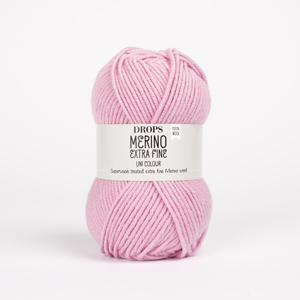
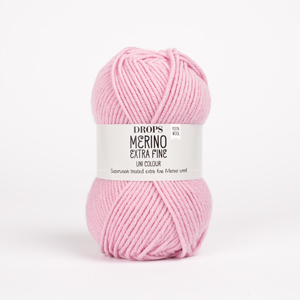
DROPS Merino Extra Fine
100% Wool
from 4.10 € /50g
Get the yarn to make this pattern from 16.40€.

The yarn cost is calculated from the pattern’s smallest size and the yarn’s cheapest product type. Looking for an even better price? You might find it on the DROPS Deals!

DROPS Autumn & Winter 26/27
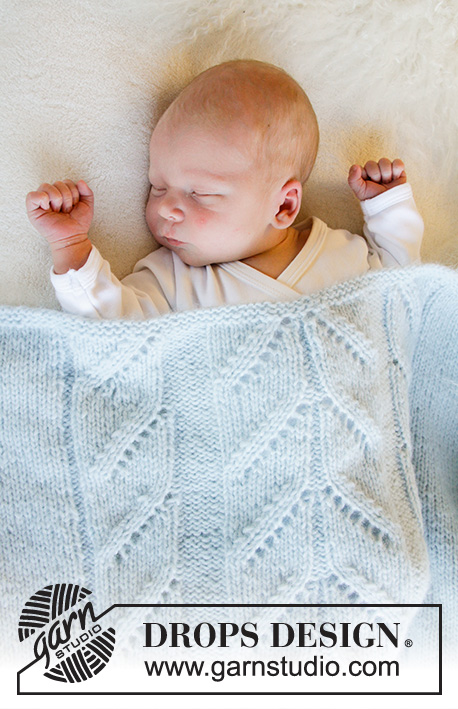
DROPS Baby 33-39

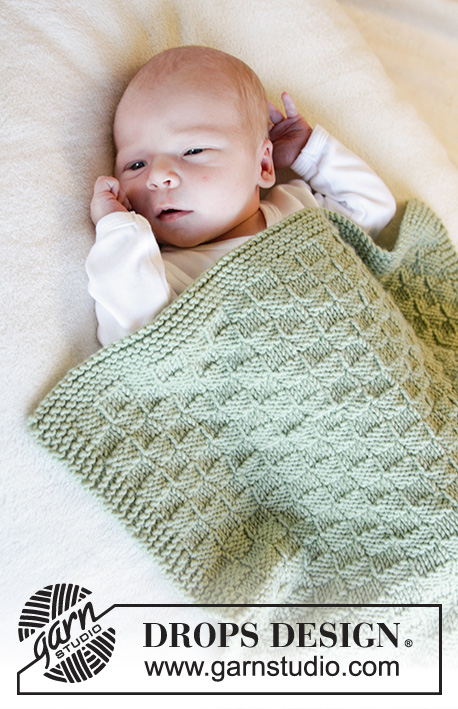
#littlethingsblanket

DROPS design: Pattern me-067-by
Yarn group B
----------------------------------------------------------

SIZE:
Width: approx. 45 - 65 cm Length: approx. 52 - 80 cm

MATERIALS:
DROPS MERINO EXTRA FINE from Garnstudio (belongs to yarn group B)
200-300 g colour 26, pistachio

KNITTING TENSION:
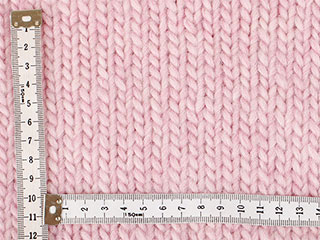
20 stitches in width and 26 rows vertically with pattern A.1 = 10 x 10 cm.

NEEDLES:
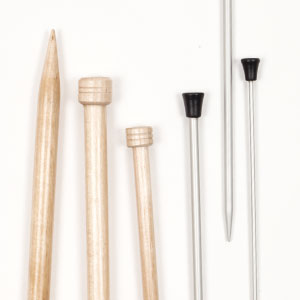
DROPS CIRCULAR NEEDLE SIZE 4.5 mm : Length 80 cm.
Needle size is only a suggestion! If you have too many stitches on 10 cm switch to larger needles. If you have too few stitches on 10 cm switch to smaller needles.

-------------------------------------------------------

Alternative Yarn – See how to change yarns here
Yarn Groups A to F – Use the same pattern and change the yarn here
Yarn usage using an alternative yarn – Use our yarn converter here

-------------------------------------------------------

You might also like...

DROPS Merino Extra Fine
100% Wool
from 4.10 € /50g
Get the yarn to make this pattern from 16.40€.

The yarn cost is calculated from the pattern’s smallest size and the yarn’s cheapest product type. Looking for an even better price? You might find it on the DROPS Deals!

Pattern instructions

0
0

----------------------------------------------------------

EXPLANATION FOR THE PATTERN:

----------------------------------------------------------

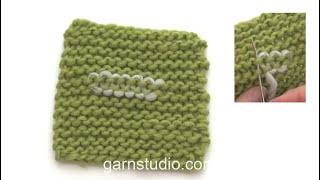
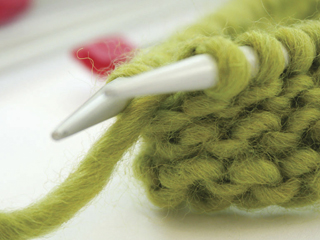
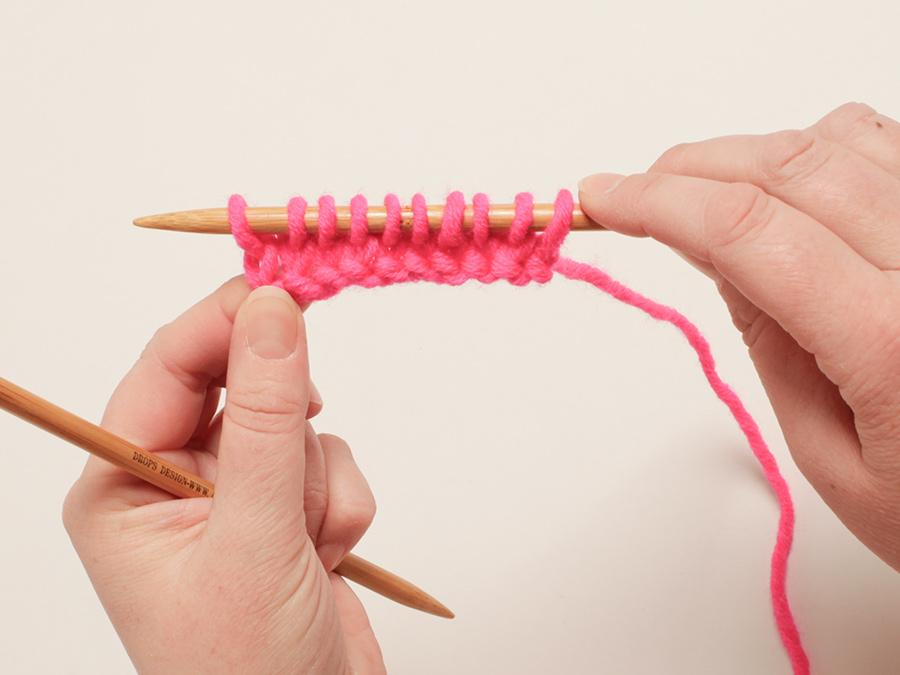
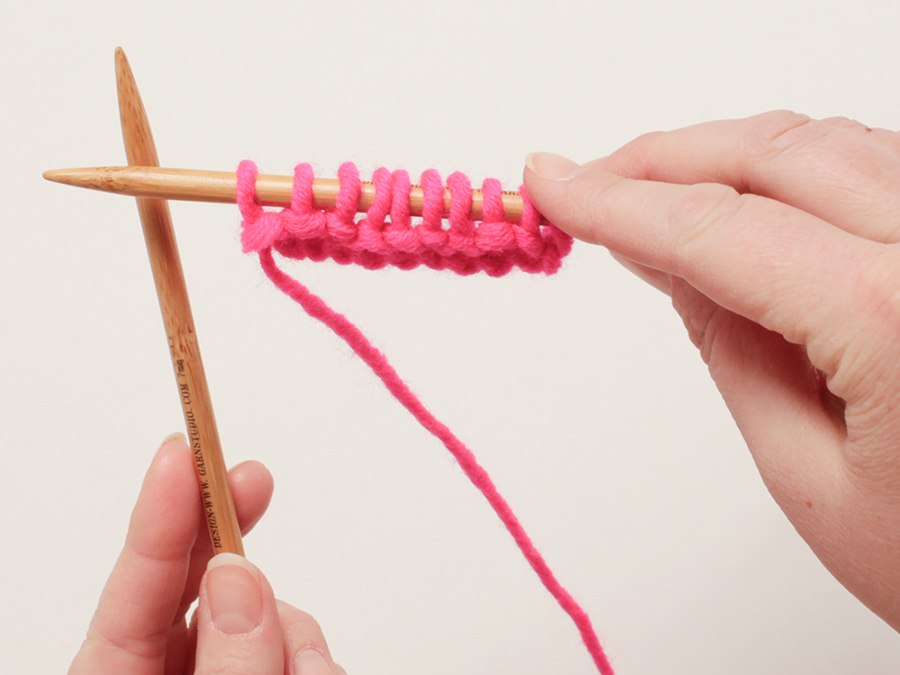
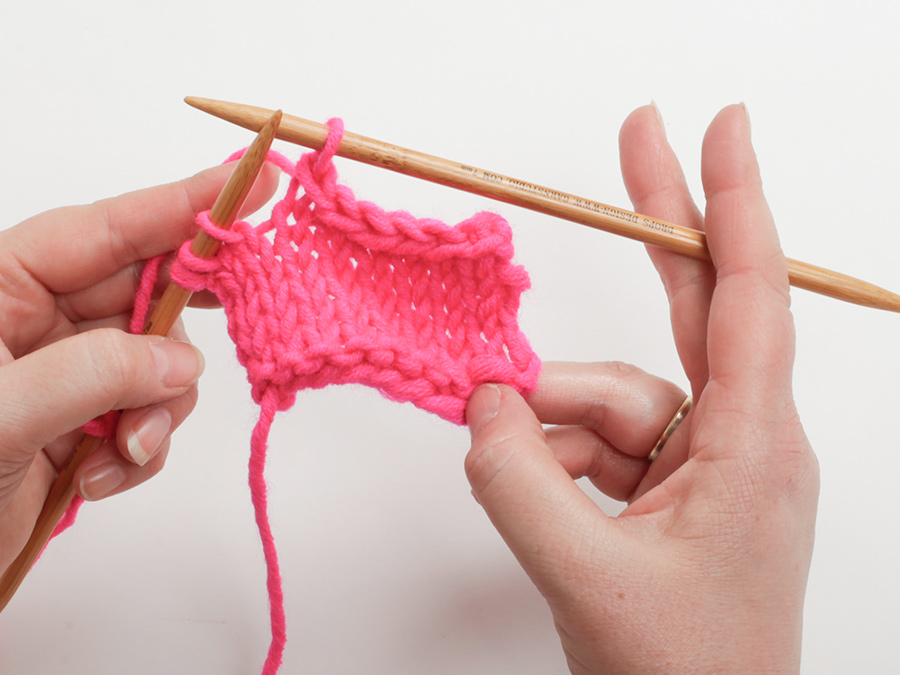
GARTER STITCH (back and forth):
Knit all rows.
1 ridge vertically = knit 2 rows.
1 ridge = knit 2 rows.

PATTERN:
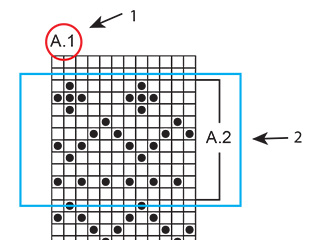
See diagrams A.1 and A.2. Diagrams show all rows in pattern seen from the right side.

CAST-OFF TIP:
To avoid a tight cast-off edge you may use a bigger needle.

----------------------------------------------------------

START THE PIECE HERE:

----------------------------------------------------------

BABY BLANKET - SHORT OVERVIEW OF THE PIECE:
Work piece back and forth on circular needle.

BLANKET:
Cast on 92 - 132 stitches on circular needle size 4.5 mm with Merino Extra Fine. Work 4 ridges in GARTER STITCH - see explanation above.
Work next row as follows from right side: 4 stitches in garter stitch, A.1 (= 8 stitches) until 8 stitches remain, now work A.2 (= 4 stitches) and 4 stitches in garter stitch.
Repeat A.1 and A.2 vertically - REMEMBER THE KNITTING TENSION! Continue until piece measures approx. 48 -76 cm, adjust after 4th or last row in diagrams. Work 4 ridges and cast off - read CAST-OFF TIP.

This pattern has been corrected.

Updated online: 06.03.2019
Correction - Yarn amount: 200-300 g

Diagram

knit from the right side, purl from the wrong side = knit from the right side, purl from the wrong side
purl from the right side, knit from the wrong side = purl from the right side, knit from the wrong side
Diagram for DROPS Baby 33-39
Do you have a question? See a list of frequently asked questions (FAQ)

Knitting tension is what determines the final measurements of your work, and is usually measured per 10 x 10 cm. It is provided like so: number of stitches in width x number of rows in height - eg: 19 stitches x 26 rows = 10 x 10 cm.

The knitting tension is very individual; some people knit/crochet loosely while others work tightly. You adjust the knitting tension with the needle size, which is why the suggested needle size is only meant as a guide! You need to adjust this (up or down) to ensure that YOUR knitting tension matches the knitting tension provided in the pattern. If you work with a different knitting tension than provided you will have a different yarn consumption, and your work will have different measurements than what the pattern suggests.

The knitting tension also determines which yarns can replace each other. As long as you achieve the same knitting tension you can replace one yarn with another.

See DROPS lesson: How to measure your tension/gauge

See DROPS video: How to make a gauge tension swatch

The required amount of yarn is provided in grams, eg: 450 g. To calculate how many balls you’ll need you first need to know how many grams are in 1 ball (25g, 50g or 100g). This information is available if you click on the individual yarn quality on our pages. Divide the amount required with the amount of each ball. For example, if each ball is 50g (the most common amount), the calculation will be as follows: 450 / 50 = 9 balls.

The important thing when changing from one yarn to another is that the knitting/crochet tension remains the same. This is so that the measurements of the finished piece will be the same as on the sketch provided. It is easier to achieve the same knitting tension using yarns from the same yarn group. It is also possible to work with multiple strands of a thinner yarn to achieve the knitting tension of a thicker one. Please try our yarn converter. We recommend you to always work a test swatch.

Please NOTE: when changing yarn the garment might have a different look and feel to the garment in the photo, due to individual properties and qualities of each yarn.

See DROPS lesson: Can I use a different yarn than the one mentioned in the pattern?

All our yarns are categorised into yarn groups (from A to F) according to thickness and knitting tension – group A contains the thinnest yarns and group F the thickest. This makes it easier for you to find alternative yarns to our patterns, should you wish to switch yarn. All yarns within the same group have a similar knitting tension and can easily replace each other. However, different yarn qualities have different structures and properties which will give the finished work a unique look and feel.

Click here for an overview of the yarns in each yarn group

At the top of all our patterns you’ll find a link to our yarn calculator, which is a helpful tool should you wish to use a different yarn than suggested. By filling in the yarn quality you wish to replace, the amount (in your size) and number of strands, the calculator will present good alternative yarns with the same knitting tension. Additionally it will tell you how much you’ll require in the new qualities and whether you’ll need to work with multiple strands. Most skeins are 50g (some are 25g or 100g).

If the pattern is worked with multiple colours, every colour will have to be calculated separately. Similarly, if the pattern is worked with several strands of different yarns (for example 1 strand Alpaca and 1 strand Kid-Silk) you will have to find alternatives for each, individually.

Click here to see our yarn calculator

Since different yarns have different qualities and textures we have chosen to keep the original yarn in our patterns. However, you can easily find options among our available qualities by using our yarn calculator, or simply pick a yarn from the same yarn group.

It is possible that some retailers still have discontinued yarns in stock, or that someone has a few skeins at home that they would like to find patterns for.

The yarn calculator will provide both alternative yarn as well as required amount in the new quality.

If you think it's hard to decide what size to make, it can be a good idea to measure a garment you own already and like the size of. Then you can pick the size by comparing those measures with the ones available in the pattern's size chart.

You'll find the size chart at the bottom of the pattern.

See DROPS lesson: How to read size chart

The needle size provided in the pattern serves only as a guide, the important thing is to follow the knitting tension. And since knitting tension is very individual, you will have to adjust the needle size to ensure that YOUR tension is the same as in the pattern – maybe you’ll have to adjust 1, or even 2 needle sizes, up or down to achieve the correct tension. For this, we recommend that you work test swatches.

Should you work with a different knitting tension than the one provided, the measurements of the finished garment might deviate from the measurement sketch.

See DROPS lesson: How to measure your tension/gauge

See DROPS video: How to make a tension/gauge swatch

Working a garment top-down provides more flexibility and room for personal adjustment. For example it is easier to try the garment on while working, as well as making adjustments to length of yoke and shoulder caps.

The instructions are carefully explaining every step, in the correct order. Diagrams are adjusted to the knitting direction and are worked as usual.

The diagram depicts all rows/rounds, and every stitch seen from the right side. It is read from bottom to top, from right to left. 1 square = 1 stitch.

When working back and forth, every other row is worked from the right side and every other row is worked from the wrong side. When working from the wrong side, the diagram will have to be worked reversed: from left to right, knit stitches are purled, purl stitches are knit etc.

When working in the round every round is worked from the right side and the diagram are worked from right to left on all rounds.

See DROPS lesson: How to read knitting diagrams

The diagram depicts all rows/rounds, and every stitch seen from the right side. It is worked from bottom to top, from right to left.

When working back and forth every other row is worked from the right side: from right to left and every other row is worked from the wrong side: from left to right.

When working in the round, every row in the diagram are worked from the right side, from right to left.

When working a circular diagram you start in the middle and work your way outwards, counter clockwise, row by row.

The rows usually start with a given number of chain stitches (equivalent to the height of the following stitch), this will either be depicted in the diagram or explained in the pattern.

See DROPS lesson: How to read crochet diagrams

Instructions for working several diagrams after each other on the same row/round, will often be written like so: “work A.1, A.2, A.3 a total of 0-0-2-3-4 times". This means you work A.1 once, then A.2 is worked once, and A.3 is repeated (in width) the number of times provided for your size – in this case like so: S = 0 times, M = 0 times, L=2 times, XL= 3 times and XXL = 4 times.

The diagrams are worked as usual: begin with the first row in A.1, then work the first row in A.2 etc.

See DROPS lesson: How to read knitting diagrams

See DROPS lesson: How to read crochet diagrams

The total width of the garment (from wrist-to-wrist) will be larger in the larger sizes, despite the actual sleeves being shorter. The larger sizes have longer sleeve caps and wider shoulders, so there will be a good fit in all sizes.

The measurement sketch/schematic drawing provides information regarding the full length of the garment. If it’s a jumper or a jacket the length is measured from the highest point on the shoulder closest to the neckline, and straight down to the bottom of the garment. It is NOT measured from the tip of shoulder. Similarly, the length of yoke is measured from the highest point on the shoulder and down to where yoke is split into body and sleeves.

On a jacket measures are never taken along bands, unless specifically stated. Always measure inside band stitches when measuring the length.

See DROPS lesson: How to read a schematic drawing

Diagrams are often repeated on the round or in height. 1 repeat is the diagram the way it appears in the pattern. If it says to work 5 repeats of A.1 in the round, then you work A.1 a total of 5 times after/next to each other in the round. If it says to work 2 repeats of A.1 vertically/in height you work the entire diagram once, then begin again at the start and work the entire diagram one more time.

Chain stitches are slightly narrower than other stitches and to avoid working the cast-on edge too tight, we simply chain more stitches to begin with. The stitch count will be adjusted on the following row to fit the pattern and measurement sketch.

The rib edge is more elastic and will contract slightly compared to, for example, stocking stitch. By increasing before the rib edge, you avoid a visible difference in width between the rib edge and the rest of the body.

It’s very easy to cast off too tightly, and by making yarn overs while casting off (and simultaneously casting these off) you avoid a too tight cast off edge.

See DROPS video: How to bind off with yarn overs (yo)

To achieve an even increase (or decrease) you can increase on, for example: every 3rd and 4th row alternately, like so: work 2 rows and increase on the 3rd row, work 3 rows and increase on the 4th. Repeat this until the increase is complete.

See DROPS lesson: Increase or decrease 1 st on every 3rd and 4th row alternately

Should you prefer to work in the round instead of back and forth, you may of course adjust the pattern. You’ll need to add steeks mid-front (usually 5 stitches), and follow the instructions. When you would normally turn and work from the wrong side, simply work across the steek and continue in the round. At the end you’ll cut the piece open, pick up stitches to work bands, and cover the cut edges.

See DROPS video: How to knit steeks and cut open

Should you prefer to work back and forth instead of in the round, you may of course adjust the pattern so you work the pieces separately and then assemble them at the end. Divide the stitches for the body in 2, add 1 edge stitch in each side (for sewing) and work the front and back pieces separately.

See DROPS lesson: Can I adapt a pattern for circular needles into straight needles?

Pattern repeats can vary slightly in the different sizes, in order to get the correct proportions. If you’re not working the exact same size as the garment in the photo, yours might deviate slightly. This has been carefully developed and adjusted so that the complete impression of the garment is the same in all sizes.

Make sure to follow instructions and diagrams for your size!

If you have found a pattern you like which is available in women’s size it’s not very difficult to convert it to men’s size. The biggest difference will be the length of sleeves and body. Start working on the women size that you think would fit across the chest. The additional length will be worked right before you cast off for the armhole/sleeve cap. If the pattern is worked top-down you can add the length right after the armhole or before the first decrease on sleeve.

Regarding additional yarn amount, this will depend on how much length you add, but it is better with a skein too many than too few.

All yarns will have excess fibres (from production) that might come off as lint or shedding. Brushed yarns (ie hairier yarns) have more of these loose, excess fibres, causing more shedding.

Shedding also depends on what is worn under or over the garment, and whether this pulls at the yarn fibres. It’s therefore not possible to guarantee that there will be no shedding

Below are some tips on how to get the best result when working with hairier yarns:

1. When the garment is finished (before you wash it) shake it vigorously so the looser hairs come off. NOTE: do NOT use a lint roller, brush or any method that pulls at the yarn.

2. Place the garment in a plastic bag and put it in your freezer - the temperature will cause the fibres to become less attached to each other, and excess fibres will come off easier.

3. Leave in the freezer for a few hours before taking it out and shaking it again.

4. Wash the garment according to the instructions on the yarn label.

Pilling is a natural process that happens to even the most exclusive of fibers. It's a natural sign of wear and tear that is hard to avoid, and that is most visible in high friction areas of your garment like a sweater's arms and cuffs.

You can make your garment look as new by removing the pilling, using a fabric comb or a pill/lint remover.

Still can't find the answer you need? Then scroll down and leave your question so one of our experts can try to help you. This will be done normally within 5 to 10 working days.
In the meantime, you can read the questions and answers that others have left to this pattern or join the DROPS Workshop on Facebook to get help from fellow knitters/crocheters!

Post a comment to pattern DROPS Baby 33-39

We would love to hear what you have to say about this pattern!

If you want to leave a question, please make sure you select the correct category in the form below, to speed up the answering process. Required fields are marked *.

Comments / Questions (59)

country flag Beatrix wrote:

Kann ich diese Decke auch in 80x80cm stricken? Und mit Garngruppe A Merinowolle Babywolle,da ich die Decke feiner haben möchte.

17.10.2026 - 14:24

DROPS Design answered:

Liebe Beatrix, dann sollen Sie die ganze Anleitung nach Ihrer eigenen Maschenprobe umrechnen; hier finden Sie Babydecken mit der Garngruppe A, ob es Ihnen helfen kann. Viel Spaß beim Stricken!

19.10.2026 - 10:26

country flag Monica wrote:

En fråga till! Stämmer det att det på avigt varv ska det avslutas med 8st rät maskor? När jag har gjort så blir det en bredare kant med rätstickning på avig varvets sida och endast med 4 st maskor på rätvarvet! Vad betyder det som står inom paranteser? Det står att A1 är räta på ett ställe och även att A2 är räta på ett annat!

13.10.2026 - 17:12

country flag Monica wrote:

Jag får omöjligt rätt på detta till synes enkla mönster! Det blir ränder istället för rutor! Betyder rät maska detsamma som rätstickad maska? Inom parantes ( MVH Monica

13.10.2026 - 16:29

DROPS Design answered:

Hej Monica du stickar 4 slätstickade maskor efter og over hinanden og så 4 slätstickade maskor med avigsidan ut efter og over hinanden :) Så varv 1: 4 rät, 4 avig, 4 rät, 4 avig. Varv 2, 3, 4 stickar du rätmaskor över rätmaskor och avigmaskor över avigmaskor. Varv 5 byter du och gör tvärt om :)

15.10.2026 - 15:12

country flag Andie Mya wrote:

I’ve finished knitting this blanket! The pattern is gorgeous, and it’s perfect for using in an air-conditioned room. Thank you all so much!

28.09.2026 - 09:43

country flag Karin wrote:

Hej! Jag ska påbörja mönstret DROPS Baby 33-39 #littlethingsblanket DROPS Design: Modell me-067. Jag undrar vad som menas när det står ”Upprepa A1 och A2 på höjden” i beskrivningen? Jag trodde diagrammen skulle läsas på bredden men jag är ganska novis på diagram.. tack för svar!

22.09.2026 - 15:16

DROPS Design answered:

Hej Karin, jo det stemmer og det er de samme gentagelser med 4 ret og 4 vrang du fortsætter igennem hele filten, både på længden og i højden :)

24.09.2026 - 10:39

country flag Marcjanna wrote:

Dzień dobry, chciałabym się dowiedzieć, czy i gdzie można zamówić DROPS Merino Extra Fine w kolorze 57 Piaskowym. Większość sklepów nie ma go w ogóle w ofercie, w jednym jest niedostępny. Będę wdzięczna za pomoc

09.09.2026 - 21:17

DROPS Design answered:

Witaj Marcjanno, jest to nowy kolor w palecie kolorów tej włóczki. Na pewno sklepy już mogą go zamawiać, ale przesyłka trochę potrwa. Musisz skontaktować się z kilkoma sklepami i zapytać kiedy będzie dostępny. Listę sklepów znajdziesz TUTAJ. Pozdrawiamy!

14.09.2026 - 20:13

country flag Yvonne wrote:

Zie mijn opmerking van zojuist over het aantal steken. In mijn patroon staat namelijk dat de grote maat 52×80 cm moet worden. Nou zie ik een antwoord op een vraag van een andere klant, 23-07-2020, 11:33. Daar staat dat de grote deken 65x90 moet worden. Dat klopt wel met die 132 steken in het patroon. Maar dan zijn die 6 bollen nooit voldoende. Staan er misschien fouten in dit patroon? Of zijn er meerdere versies van?

22.08.2026 - 13:19

DROPS Design answered:

Dag Yvonne,

Ik weet niet wat er mis is gegaan maar de aangegeven afmetingen in het antwoord van de andere klant lijken niet te kloppen. De afmetingen die bovenaan staan kloppen wel. De benodigde hoeveelheid bollen is ook juist.

25.08.2026 - 15:42

country flag Yvonne wrote:

Ik was bezig met de grote. Na 3 bollen (van de 6) zat ik nog lang niet op 40 cm (van de 80). Het werk van de pennen gehaald om goed te kunnen meten. De breedte bleek tegen de 70 cm te zijn, i.p.v. de 52 die het zou moeten zijn. Alles uitgehaald. Maar dit was een te groot verschil om met dunnere pennen op te kunnen lossen. En je wilt ook de soepelheid van de deken behouden. Ik heb nu 108 steken opgezet, i.p.v. 132. Nu gaat het goed.

22.08.2026 - 13:08

country flag Eija wrote:

Tarvitaanko kohoneule vauvan peitossa A2 malli ?

14.08.2026 - 15:38

DROPS Design answered:

Hei, kohoneuleen sijaan voit hyvin neuloa esim. sileää neuletta. Neuletiheys on sama.

14.08.2026 - 17:33

country flag Petra wrote:

Ich würde die Decke gerne mit Baby Merino Wolle Stricken. Bitte Anleitung ung benötigtes Material erläutern.

01.08.2026 - 21:43

DROPS Design answered:

Liebe Petra, Baby Merino hat eine andere Maschenprobe als das Originalgarn Merino Extra Fine und eine Umrechnung können wir Ihnen hier nicht bieten, aber Sie könnten, wenn Sie das möchten, selbst umrechnen: Fertigen Sie eine Maschenprobe mit Baby Merino an und schauen Sie, wie viele Maschen Sie pro 10 cm benötigen. Das rechnen Sie dann auf die Breite der Decke um und schlagen die benötigte Maschenzahl an, die Maschenzahl muss dabei durch 8 + 4 teilbar sein. Die Decke wird etwas dünner als mit dem Originalgarn und mit einer anderen Maschenprobe ändert sich auch der Garnverbrauch. Sie sollten etwas mehr einplanen als die gesamte Lauflänge, die für das Originalgarn angegeben ist. Viel Spaß beim Stricken!

03.08.2026 - 22:41