
Categorias populares
Procura um fio?
Amostra/tensão do tricô

Agulhas mais grossas darão uma amostra mais pequena (menos malhas por cada cm), agulhas mais finas darão uma amostra maior (mais malhas por cada cm).
O canelado ou barra e as tranças têm mais malhas em largura do que o ponto meia, o ponto jarreteira ou o ponto de arroz. E o ponto jarreteira ou ponto de arroz têm mais carreiras por cada 10 cm do que o ponto meia.
Os fios grossos produzem malhas maiores (reduzindo, desta maneira, o número de malhas em largura e em altura).
A sua amostra pode igualmente ser diferente numa mesma peça (isto acontece, em particular, com as tricotadeiras principiantes), ou, quando está mais habituada ao ponto, sente-se mais relaxada e tricota as malhas de forma diferente o que vai dar, por conseguinte, uma tensão diferente.
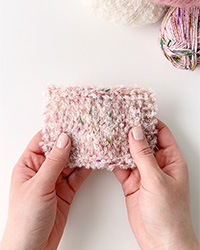
Para ter a certeza que obtém as dimensões exactas de uma peça, é muito importante, antes de começar a tricotar, verificar a sua tensão. Tricote um simples quadrado (amostra) no ponto indicado com o fio usado para o modelo. Os rebordos da amostra têm também uma grande influência na leitura da amostra e, por isso, recomenda-se que se tricote um quadrado de, pelo menos, 15 x 15 cm.
A amostra também lhe permite de se habituar ao ponto tricotado, o que a ajudará, depois, a manter uma tensão mais regular até ao fim quando tricotar a peça.
Modelos que utilizam esta técnica
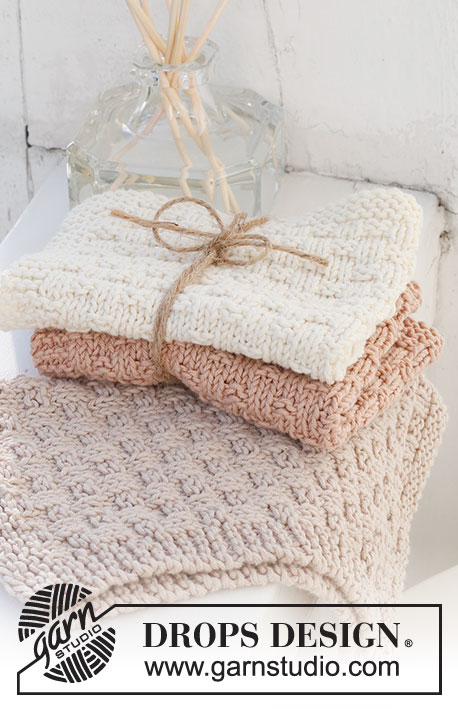
Vídeo #108, listado em: Outras técnicas, Aprenda a tricotar, Dicas Extra
Os nossos vídeos não têm som. Somos uma empresa internacional e os nossos vídeos são vistos por essoas que falam diferentes línguas e muitas delas não compreendem o português. Por isso, como não podemos usar uma determinada língua, temos instruções escritas para acompanhar o vídeo, e não há quaisquer sons intrusivos enquanto vê o vídeo.
Pode alterar a velocidade do vídeo ao clicar no ícone na barra do play.
Deixar um comentário ou uma pergunta acerca deste vídeo
O seu email não será publicado. Os campos obrigatórios estão assinalados com um *.
Também poderá gostar...

Com mais de 40 anos no design de modelos de tricô e de croché, a DROPS Design oferece uma das mais vastas colecções demodelos gratuitos na Internet - traduzidos em 17 línguas. Neste dia de hoje, temos 325 catálogos e 12298 modelos - dos quais 12279 estão traduzidos em português.
Trabalhamos com muito empenho para lhe proporcionar o melhor que o tricô e o croché têm para oferecer, para lhe fornecer inspiração e conselhos bem como fios da mais elevada qualidade a preços incríveis! Gostaria de usar os nossos modelos para outros fins que não uso pessoal? Pode ler o que lhe é permitido fazer no Copyright texto que se encontra na parte de baixo de todos os nossos modelos. Bom tricô! Bom croché!
Bonjour, je suis en train de faire l’échantillon pour le modèle SIRI boléro . Au lieu de « AIGUILLES n° 5 - pour obtenir un échantillon de 17 m x 33 rangs au point mousse ou 17 m x 22 rangs en jersey = 10 x 10 cm »\r\nMoi après plusieurs essais à 5, 5.5, Je suis rendue aux aiguilles 6 et j’obtiens en jersey 17.5m x 23.5 en jersey et en point mousse je suis beaucoup plus large que mon jersey donc je n’arrive pas à avoir 17 m !!! Je suis découragée !
21.06.2019 - 03:18DROPS Design :
Bonjour Coraline, on a toutes une façon différente de tricoter, plus ou moins serré, c'est la raison pour laquelle on doit toujours faire son échantillon auparavant. Essayez de nouveau avec des aiguilles d'une demi-taille au-dessous, 5,5 par exemple, lavez et séchez votre échantillon bien à plat, et vérifiez de nouveau vos mesures. Vous pouvez également tenter une technique différente pour les mailles endroit et les mailles envers (cf vidéos du modèle). Votre magasin aura également d'autres astuces pour vous, n'hésitez pas à le contacter, même par mail ou téléphone. Bon tricot!
21.06.2019 - 07:22Merci beaucoup pour la réponse rapide !
24.04.2019 - 21:30Également est ce qu’il faut réaliser un échantillon pour chaque point du projet s’il en comporte plusieurs : torsade, point ajouré etc ? Parce que si les échantillons sont différents faut il changer plusieurs fois de taille D’aiguille dans le même projet en fonction des différents points du diagramme ? Un grand merci !
19.04.2019 - 20:45DROPS Design :
Bonjour Coraline, tout à fait, le nombre de mailles pour 10 cm sera différent sur du jersey ou des torsades par exemple, suivez simplement les indications de l'échantillon, s'il est indiqué "jersey" alors tricotez votre échantillon en jersey (et ajustez la taille des aiguilles si besoin), si votre échantillon est juste, conservez la même tension et alors votre point torsades ou autre aura la bonne largeur. Bon tricot!
23.04.2019 - 16:12Bonjour ,pour les projets comme les bonnets les côtes nécessitent des aiguilles plus petites exemple 3.5 et le reste du bonnet en 4.5 . Est ce qu’il faut réaliser deux échantillons distincts pour de tels projets ?
19.04.2019 - 20:44DROPS Design :
Bonjour Coraline, en général l'échantillon est indiqué dans le point principal du modèle, si vous avez cet échantillon, alors les côtes devraient être justes avec les aiguilles plus fines. Sauf si l'échantillon est indiqué pour les différentes tailles d'aiguilles, on peut se contenter de le faire dans le point indiqué avec les aiguilles utilisées pour ce point. Bon tricot!
23.04.2019 - 16:10I made a swatch and my number of stitches are perfect, but the number of needles were not enough. But when I toke a bigger needle, my swatch became to wide. What is better: correct number of stitches or a correct number of needle? I am going to make a sweater. I think it is beter to go for the correct number of stitches, right?
18.10.2018 - 14:08DROPS Design :
Dear Sun, you can also first block your swatch to check the finished tension and measurements. If you are missing some rows, you can try again with a larger needles, but if widht is not correct anymore, you can keep the needles with the correct width but then work some more rows if you have to work a raglan/a rounded yoke so that the height will be right. Your DROPS store will provide you any further individual assistance, even per mail or telephone. Happy knitting!
22.10.2018 - 10:36Avrei bisogno un chiarimento. Quando nelle spiegazioni è previsto l'utilizzo solo di ferri circolari, il campione può essere fatto con i ferri dritti? Inoltre prima di misurarlo è meglio bagnarlo? Specialmente per i filati superwash che spesso tendono a smollare dopo il lavaggio? Grazie
17.07.2017 - 18:46DROPS Design :
Buongiorno Dea. Il campione andrebbe lavorato con gli stessi ferri (dritti o circolari) che verranno poi usati per il lavoro. Consigliamo di misurare il campione dopo averlo lavato e fatto asciugare. Buon lavoro!
18.07.2017 - 15:49The finish square to be measured for getting the gauge is after blocking or not blocked?
14.04.2016 - 01:45DROPS Design :
Dear Monica, it's always a good idea to wash and block your swatch before measuring it. Your DROPS store will give you any further personnal assistance and advices if required. Happy knitting!
14.04.2016 - 09:45Noen ønster angir strikkefastheten i antall rapporter måler xxcm x xxcm av det mønsteret man ska bruke på deler av plagget. men hvordan kan man regne om dersom man bytter garn/ikke treffer målene med samme antall rapporter?
29.06.2015 - 10:26DROPS Design :
Hej Lisa. Du strikker da en pröve med det garn du vil bruge og maal hvor mange m x p du har paa 10 x 10 cm. Har du f.eks. en pröve med 22 m i bredden og skal dit plag vaere 40 cm bredt, saa regner du 22x4 = ca 88 cm osv.
03.07.2015 - 10:51Barbara escreveu:
Please, tell me what to do if I knit a swatch and finally I didn't get the right number of stiches per cm. My tension is tight and it's hard for me to knit more loosely..
08.04.2014 - 10:01DROPS Design :
Dear Barbara, if you have too many sts for 10 cm/4" then change to larger needles. Happy knitting!
08.04.2014 - 10:41En fin video, MEN hvad gør jeg så når maske antallet passer men pinde antallet ikke gør? F.eks. til model 124-18. Kan jeg så ikke stikke den model? Jeg er Meget glad for jeres hjemmeside og garnet, bruger det hele tiden. Med venlig hilsen Lene
02.05.2013 - 21:50