
Popular categories
Looking for a yarn?
Can I adapt a pattern for circular needles into straight needles?
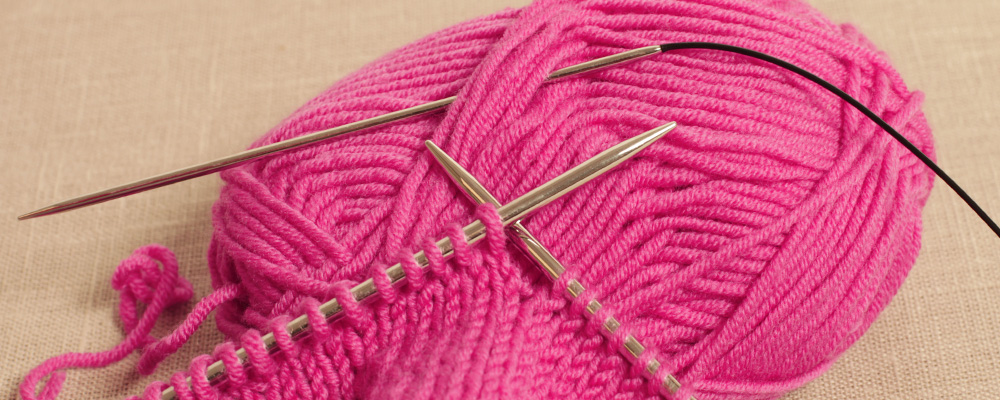
A number of DROPS patterns are worked on circular needles. This technique is very popular in many countries in Northern Europe, the UK and the US and is a method with many advantages; you avoid seems and all rounds are worked from the right side.
But if you prefer, you can adapt most patterns for straight needles.
Here's a basic example:
- The pattern states you need to cast on 200 sts for both the front and the back of a sweater.
- This means 100 sts are for the front and 100 sts are for the back.
- Now add 1 edge st at both sides for the seam = 102 st for the front and for the back.
- Start knitting back and forth. Increases/decreases will be done at each side according to the description in the pattern (when the pattern says to inc or dec on each side of the marker for the sides, instead work inc or dec on each side of the edge sts).
Always read the patterns thoroughly so all actions are clear and write down your adaptations to avoid confusion and errors.
Please pay attention to:
- If there's a pattern in the design, make sure the number of stitches are matching the lace/structure or colour pattern.
- Raglan or round yokes are more complicated and can be difficult to adapt to straight needles. If you find this too difficult, a suggestion could be to work the body and sleeves on straight needles and then work only the yoke on circular needles.
- Results may vary from the original design when making your own adaptations!
Some of the patterns for circular needles (e.g. jackets, cardigans and shawls) are worked back and forth on them – this is often done if there are many stitches on the needles, since circular needles are longer than straight needles. In many cases you will be able to work these patterns on a straight needle – just make sure that all stitches will fit on the needle.
Many DROPS stores also offer workshops or classes. Contact your store for more information
 Ondine76 wrote:
 Stadelmann wrote:
 Patricia wrote:
 Conny Lipp wrote:
 Frida wrote:
 Ase White wrote:
With over 40 years in knitting and crochet design, DROPS Design offers one of the most extensive collections of free patterns on the internet - translated to 17 languages. As of today we count 324 catalogues and 12290 patterns translated into English (UK/cm).
We work hard to bring you the best knitting and crochet have to offer, inspiration and advice as well as great quality yarns at incredible prices! Would you like to use our patterns for other than personal use? You can read what you are allowed to do in the Copyright text at the bottom of all our patterns. Happy crafting!
Bonjour, Je suis comme beaucoup réfractaire aux aiguilles circulaires. De ce fait, j'ai acheté sur internet des aiguilles droites d'une longueur de plus de 60cm qui commence à la taille 3,5. Idéal pour tous les modèles tricoté du style gilet, verte etc......... Bonne journée à toutes et tous
25.01.2017 - 17:15